What's So Great About Project Based Learning?

I read an interesting article recently that talked about the "Peak Moments" in our learning experiences and how they tend to be things that happen outside of the classroom.  Extra curricular activities such as sports, band, and social events tend to top the memory of peak moments in our K-12 school experience. As a teacher, I have to say this made me a little sad.  We just covered the topic of memory in the STEM ED course I teach, and how memory plays such a huge role in education.  Giving our students learning experience that are engaging and memorable should be a top priority for educators. 

Project Based Learning is one teaching practice that can meet this need. Project Based Learning is a teaching practice that brings real life scenarios to students and allows them to use a variety of skills from many subject areas to solve a problem.  It really is the perfect way to integrate subjects and bring that all important relevance to students.  Research supports that creating these memorable and engaging learning experiences for students pays dividends in so many areas; critical thinking, problem solving skills, collaboration, and memory recall.  

Affording our students the opportunity to apply skills to new situations is the ultimate goal of education.  PBL does just that.  Combining PBL with cooperative groups also allows students to develop communication and collaboration skills, all skills they will need in their future careers.  

I love creating Project Based Learning products and have made quite a few over the years.  Here are a few of my favorites:

    
What are some "peak moments" that you remember from your learning?  What are some "peak moments" you have created for your students?  Share in the comments below.

The Pandemic Has Changed Teaching Forever

As I sit here preparing for the upcoming school year, I can't help but notice how much teaching has changed in the past year.  Teachers have learned so much about being flexible and finding new ways to teach students. I worked so hard last year converting a lot of my teaching materials to digital, even for the in person teaching I did.  Limiting the passing out of papers became easy after a while, and I think my students liked being able to access everything with the click of a mouse.

This year I still plan to use many of the digital tools and resources I created last year.  For one thing, it's a time saver not having to go make copies of activity sheets for students. It's also super efficient when I don't have to waste time passing out papers. 

As this fall unfolds, the uncertainty can't be ignored.  Numbers in my state of positive covid tests are skyrocketing, and with the elementary students unable to get vaccinated at this point, I can't help but wonder what will be happening once we get all the kids back in classrooms over the next few weeks.  

Mask mandates are now required once again in my workplace.  Attendance trackers are back, and preparing for the possibility of having to return to online teaching is a reality we all face.

I spent A LOT of time over the summer updating my science products that I sell on TpT to include a digital option.  I hesitated to convert hands on science activities to digital, because for one thing, they are hands on lessons.  But once I got to work looking at the activities and thinking of ways to modify for digital, it became clear that science can effectively be taught at a distance.  Yes, students do need science materials to really learn science concepts, but I did this last year by creating take home science kits that students picked up at the beginning of the semester.  If you teach younger students, you could provide a list of materials parents could provide for each unit. 


Having options for teaching delivery is the new normal for the 2021-2022 school year.  Being prepared will make your school year run smoothly, even when you have to pivot back and forth, like many of us did last year.  Leave a comment below to share some things you will be doing differently this year.

Here's to a successful and engaging new school year!  Wishing you all the best!


Dr. Jan


You Can Still Teach Hands on Science......Even from a Distance!

 A new semester has begun for me, and this will be my second semester of teaching an Elementary Science Methods course to pre-service teachers remotely.  Teaching hands on science remotely seems like quite a paradox, but I've learned that it doesn't have to be!

My philosophy of teaching science is a constructivist approach, which means I have a strong belief that people (students and adults) learn science concepts best if they get to experience science though hands on experiences.  One strategy I have always used in my science methods class is to have my university students take on the role of elementary students and engage in activities and experiments in class.  With the remote class I've had to think a little outside the box.

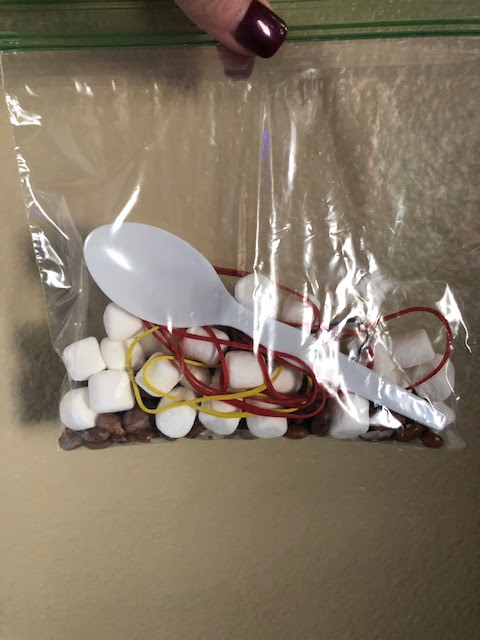
One strategy I am currently using is to make take home science kits for students.  I began by brainstorming experiments and activities that could be done with easy to access and inexpensive materials  I also wanted the experiments to cover a wide range of science topics to give my students experiences in all areas of science.  The kits I created include a battery, a piece of insulated wire with the ends stripped, a mini lightbulb, a pipette, 10 sugar cubes, a film canister, 2 Alka Seltzer tablets,  a snack bag containing rice, mini marshmallows, beans, and rubber bands, plastic tweezers, a toothpick and  a plastic spoon,  a magnet and a piece of foil.  These simple materials will allow my students to engage in 6 different science activities or experiments. They easily fit in a gallon sized Ziploc bag, and students can come to campus to pick them up.

Experiment 1:  Let Their Be Light

Students are tasked with trying to light a lightbulb using a wire, a bulb, and a battery.  No directions are given so that students can experiment. They then make simple sketches of ways that worked, and ways that did not.  The drawings can serve as a great starting point for discussion.  Simply asking, "What do you notice about the ones that did work?" can get students to understand what a complete circuit is. 

Experiment 2:  Weathering Activity

Students build mini houses using their sugar cubes.  They are then directed to "rain" lightly on their homes using a pipette and a small cup of water.  Although our homes don't dissolve with rain, this activity shows the power of water on softer rocks such as sandstone.  


Experiment 3:  Film Canister Rockets

This activity involves the chemical reaction of Alka Seltzer tablets in water.  The gases build up inside the film canister and force the cap to fly off.  The idea of Newton's 3rd law that states for every action there is an opposite and equal reaction is demonstrated. This activity does require safety reminders and can be conducted in two ways.  Students can put water in the film canister and then add the Alka Seltzer and quickly put the cap on and turn the canister cap side down.  Or, a safer option is to place the canister on it's side so that it launches across the floor instead of straight up.   Time in flight can be used to measure option 1, and distance can be used to measure option 2.  Students can be challenged to change the amount of water and/or the amount of Alka Seltzer for the best launch. 

Experiment 4:  Birds and Beaks

For this activity students investigate different beaks and discover which kind of food is more suitable for different beaks.  Students spread out the materials in the sandwich bag (beans, mini marshmallows, rubber bands, and rice)  They then "eat" using different types of beaks (spoon, tweezers, toothpick) for 30 seconds. The rule is they can only pick up one piece of food at a time using the beak in the way it was intended.  They can put the "food" into a cup. I make a google sheet for students to record how many of each type of food they eat and then students look for patterns and discuss what they notice. 


For experiment 5 I included a magnet to allow student to do some investigating with magnets.  I also included a piece of foil for experiment 6 to allow students to investigate the engineering design process to see how many pennies a foil boat they construct can hold. 

I have the students conduct some of the experiments with me over Zoom, and for some experiments I used videos in apps like Nearpod and EdPuzzle to have students work through the experiments with me asynchronously.   Feedback I've received from last semester indicates that students really appreciate getting to experience science through hands on opportunities, so I think me extra effort is well worth it. 

Do you have some simple science activity ideas that might work well for take home science?  Share your ideas in the comments below. 


Distance Learning Apps and Platforms to Engage Students

I've been on a steep learning curve journey the past few weeks trying to learn new ways of teaching in the new frontier of distance learning.  Even though I teach at the university level, I feel that many of the apps I have discovered can be easily used in K-12 as well.  I've had to completely redesign a few of the courses I am teaching this semester and it's been a journey!  The word that my colleagues and I seem to be repeating often is "overwhelmed".  Hopefully my descriptions of these apps can help you design engaging learning opportunities for your students, even when you are not with them.  


1.  Flipgrid:  Flipgrid is an easy video app where you and your students can make mini videos.  It feels a little more personal when you can see each other's faces.  The other thing I love about this platform is that you can also reply with a video.  It's sort of like a visual discussion board, which makes things much more engaging for students.  You can create a free class account and share the code for the class with students so they can find it easily.  You can create individual assignments within each class with descriptions and prompts on what students need to discuss in the video.  You can also adjust the time frame when you set up assignments; the default is 90 seconds, but you can make it longer or shorter.  I found this video helpful in learning a few more tricks in Flipgrid.  Flipgrid is free.  Here's a screen shot of my home page for my STEM ED Course.  I have added 2 assignments so far. 

EdPuzzle:  Edpuzzle allows you to upload videos you want your students to watch, with the added tool of inserting questions throughout the video.  The video will actually stop until the viewer has answered the question.  You can go back to your EdPuzzle account and see what students responded.  This platform gives students accountability for watching videos.  One thing I learned with this one is that you need to ask the students what their names are right away so you have record of each student's participation.  You can find videos that are already out there, or you can make your own.  I've even recorded Zoom sessions with screen share of a PowerPoint and then uploaded those to EdPuzzle so that I can ask questions throughout.  Ed Puzzle is free for up to 20 videos stored per free account. 

3.  Nearpod:  This is probably my favorite so far.  I am using this app for many of my asynchronous teaching days where I am not on live Zoom.  This app allows you to use powerpoints and insert all different kinds of interactive media.  You can insert open ended questions, polls, web pages, simulations, and even your voice.   If you use Google Drive to create slides you can install the Nearpod Add On which makes it super easy to use by allowing you to insert the interactive pieces right into your google slides presentation.  For this one after you create the interactive presentation you get a code to share with your students.  Nearpod is free for the "Silver" level.  You can pay to get more benefits.

4.  Voxer:  Voxer is a walkie talkie type app where students can use their phones to have conversations regarding a reading or specific assignment.  I am using this as a collaborative tool and making "Voxer Groups" so that groups of students can have a discussion group.  Each group has to add me as well so that I can listen in.  Voxer is free for the basic app.

Take some time to check these platforms out and be patient with yourself.  It took me a week or so to get comfortable with each of these.  I'm excited to give my students some engaging tools to help with the distance learning aspect of learning.  

Are there any other apps or platforms that you have discovered?  If so please leave a comment and share your experiences.  We really are all in this together!

Now What? Making the Transition to Learning (and Teaching) From Home

Just a week ago I was hitting golf balls enjoying a nice spring afternoon.  Now I am self-isolating and attempting to teach my college students from home.  It's been quite a scramble to get things figured out, and honestly, it's still a process.  I've read several articles floating around out there, and the biggest message I am hearing is, we don't need to feel like we have to do everything perfectly.  Some things are going to have to go.  What we need to do as educators is find ways to educate students as best we can, and not be so hard on ourselves.  I decided on a very simple format for my college students taking an introductory 1 credit education class.  It's one page of directions with  a "Read This" section with links to articles related to the topic of the week, a "Watch This" section with links to videos for them to watch, and a "Do This" section for them to complete a discussion board thread post or written reflection with prompts.  We need to remember that our students are also transitioning to this online learning from home challenge that they did not sign up for.  I think keeping things simple and demanding a little less of them during these times is the right thing to do.

After deciding on this simple format for my college students, I got to thinking about the K-12 students.  I create science curriculum mostly for elementary level students, and my philosophy is highly inquiry and hands on learning.  But with this wrench in the system, it might not be feasible to ask students to find the materials to conduct hands on lessons that are normally done in schools.  I decided to create some new resources that students could use at home to continue their learning of science topics.  Adopting a similar format to my college class, I have 4 sections:  Read This, Watch This, Do This, and Try This.  The "Try This" is an attempt to give the home-bound students an opportunity to do some sort of hands on learning using simple materials that can be found at home.  Each of the topics is sold separately, but I also have a Growing Bundle of all the topics that I will continue to add to over the next several weeks.  Check it out by clicking on the image below.


Here's to getting through this challenge with grit and determination.  Take care of yourself, don't try to be perfect, and help keep those kiddos learning!

Tips for STEM Night Success

I recently was tasked with planning a STEM night at a rural school in our state.  I worked with one of our graduates who is currently teaching at the middle school to coordinate activities and presentations for the elementary students of the community.  We trained the middle school students to facilitate the activities with the help of some of my college students. 

Here are 10 things I have learned from planning and carrying out this STEM Night:
1.  STEM nights are A LOT of work!
2.  Communication is the key to good attendance.
3.  Using social media to share about the event works well!  Most schools/school districts have Facebook pages.
4.  People don't tend to RSVP even when an email RSVP form is sent to every family.
5.  Find a guest speaker/presenter to kick off the event.
6.  Volunteers appreciate food.
7.  Plan and prepare plenty of materials for the activities.  It's better to have too many than not enough.
8.  Spread activities out.  We used the cafeteria for the more mellow activities, and used classrooms for the louder ones and ones with projectiles. (Check out my STEM night product for activity ideas here).
9.  Take pictures!  (This is where I didn't do so well; I was distracted with organizing)
10.  Get there early to get set up and organized.  This will ease your stress on the day of the event.t

I have participated in tons of STEM nights in my years of teaching, but this was the first one I actually coordinated.  The biggest worry for me was that no one would show up.  Since hardly any families RSVP'd I seriously didn't sleep the night before.  But thankfully, people did show up and all my worries were for nothing. 


Another great bonus that I was fortunate enough to have was a guest speaker who was a real live astronaut.  I truly believe the NASA astronaut was a huge draw for the community, and many wanted to come and listen to his presentation before the activities began. 


So my big take away is that this was a TON of work, but it was so worth it in the end.  Seeing the kids smiling faces was amazing, and the turn out of volunteers was very impressive.  Especially since they had to drive more than an hour to get to the school where the event was held.


New Year, New Science Goals!

Life as an elementary teacher is challenging to say the least.  One of the biggest challenges is trying to juggle all of the different subjects and find time for everything.  Coupled with the pressure for students to perform well on standardize tests, it's no wonder that science often takes a back seat.

Do your students a favor, and find ways to make science more of a priority in 2020.  There are a variety of ways to work smarter, not harder when fitting science into your school week.  Here are some ideas to get you started:

1.   Science Friday: When I taught 5th grade, I had great success with committing to teach science on Fridays; once before lunch and again after lunch.  That gave my students about an hour an a half of science for the week.  Fridays worked well for me with my specials schedule and it had the added side affect of getting kids to school on Fridays.  For some reason, that day is notorious for student absences, which doesn't fit so well with weekly spelling tests and other assessments. With Science Friday, the kids looked forward to it and made sure they didn't miss school that day.

2. Team Teach:  If you have a big enough school with more than one teacher at your grade level, try team teaching science.  Get super prepared and immersed in one science unit and become the expert at your grade level.  Trade students or rotate classrooms to teach each other's students the one unit you've become a pro at. 

3. Science Centers:  Science centers are a super efficient way to get all concepts in and let students do hands on experiments without needing enough materials for the entire class.  Set up 5 centers around the room for a week and have students rotate to one each day.  Students should be able to do a quick science activity and have an opportunity to write about their experiences in a journal in a 30 minute time frame.


4.  Integrate Science:  Students are naturally engaged with science topics due to their curiosity about their world.  Try flipping things around and using science as the central theme or topic to integrate with language arts and mathematics.  There are plenty of opportunities for reading and writing in science, and mathematics is a natural fit, especially with data and data analysis.

Give some of these ideas a try!  Your students will thank you for fitting one of their favorite subjects in!


5 Tips for a Great Year of Science!

I don't know about you, but there is something very special about the Back to School season. Fresh pencils, fresh starts, and new smiling faces in your classroom. Establishing routines and sharing expectations are an integral part of the start of the school year. Here are some tips to help you get your year of science off to a great start.


1.  Practice using common science tools before diving into any units or experiments. Young scientists need time to practice using science tools such as pipettes, digital scales, graduated cylinders or even goggles. One way to do this is to set up science tools centers around the room and let students practice using the tools you plan to use throughout the year. This will save oodles of time and frustration.


2. Give Your Students Science Notebooks.  Have students decorate their own science notebook. A simple single subject notebook or composition book will work well. Science notebooks help make your students feel like real scientists, and give them a place to write observations or glue artifacts from experiments. The notebooks also serve as a great review tool for students to study for tests.


3.  Preview Science Units.  Give students a glimpse into the different topics and units they will be learning about this year. This will get them excited about science and give them plenty to look forward to.


4. Introduce Your Students to the Wide Variety of Science Careers.  Many young students are not aware of the wide variety of science fields. Brainstorm different kinds of scientists with your students and find books or internet resources that depict the wide variety of science fields. This can get students excited about science and perhaps encourage them to pursue a science career in their future.


5. Round Up Resources for Science Units:  Research supports a hands on approach for teaching and learning science. Finding inexpensive (or free) science resources is essential. Try finding community partners such as grocery stores or small business that can donate to your science lessons. I get meat trays from the local grocery store for free that work great for many science experiments. Use crowd funding platforms to fund your science materials; Donor's Choose is a good one, but there are many more. Ask your school PTA to help you pay for science supplies. If your district allows, you could also send home lists of needed supplies to parents if they are things parents might have at home.

I do have a few resources in my store to help with the tips above.  I have a Science Experiment Tools product that has center activities for many common science tools. I have a free Science Notebook Starter Pack that can help your students get started with setting up notebooks. I also have a Science Careers Bundle that gives students a chance to learn about 5 different science careers. Each career has a hands on activity that simulates what each type of scientist might do as part of their jobs.

Here's to wishing you a fantastic year of science!!!!


Why You Need to be Teaching Science to Kindergarten and First Grade Students

Kindergarten and First Grade teachers have the challenging task of acclimating their students to learning in school and focusing on literacy and math skills.  It's understandable that some teachers of the Littles feel too pressed for time to squeeze science in.  But I'm here to tell you why you need to be teaching science to those young students.

1.  Science is an engaging topic for young and old alike.
2.  Young children are fascinated by the world around them and always are wondering "why?"
3.  Literacy and math skills are an integral part of doing science
4.  The Next Generation Science Standards documents are linked to Common Core ELA and Math
5.  Students exposed to science at a young age are more likely to choose a science career
6.  Students exposed to science at a young age are more likely to have a positive attitude towards science.

There are many more reasons I could add to this list, including the fact that we live in a STEM society, and many jobs of the present and future are STEM related.  As an advocate for girls and STEM, girls that are exposed to science and STEM at young ages are much more likely to become interested in science and STEM careers as they enter junior high and high school. 

I challenge you to find time to fit science into your day.  Your students will thank you!

Be sure to check out my entire year science bundles.  Language and math skills are integrated into many of the activities allowing you to teach to a variety of standards with one lesson.


Yes! Your Elementary Students Can Engage in Scientific Argumentation!

When I first learned about the NGSS practices, I felt overwhelmed with what was expected of elementary students. One practice in particular, Engaging in Argument from Evidence, seemed particularly overwhelming. Through my own professional development and investigation, I have learned that this practice is absolutely doable with elementary aged students if the proper scaffolding is provided.  

The key to getting your students comfortable with this practice is to give them opportunities to practice this skill using a variety of specific step by step instructions.  

Step 1:  Establish agreed upon rules for argumentation and discussion sessions
Step 2:  Provide sentence starters to help students get started with discussion
Step 3:  Provide "talking chips" to assure that all group members get a chance to share ideas
Step 4:  Require students to restate what the speaker before them said before sharing their ideas
Step 5:  Require students to provide evidence for their claims

In addition to these tips, the key is to find interesting topics that are a little ambiguous. This will allow for evidence to support each side depending on the way the argument question is worded. I've developed my first two argumentation activities and plan to make more. The first one involves debating which is worse, a tornado or a hurricane.This is ambiguous because the word "worse" is not defined and is up for interpretation. The other topic I have developed is Which is worse, an earthquake or a volcanic eruption? Again by using the word worse, it is left up to interpretation and could be argued from every side. Check these products out below:


How does Science Assessment Stack Up?

Testing season is upon us once again, and I thought I'd take this opportunity to reflect on science education at the elementary level with regards to testing.  I am not advocating for giving students more tests, but I have to wonder why science is not given the same amount of attention in elementary school as other subjects.  A good barometer for assessing the value of a subject is the assessments associated with it.  In my state, students are assessed in Reading, Language Arts, and Math from Kindergarten on.  Science, however, is only assessed in 5th grade.

Although some teachers will teach science regardless, many other teachers feel the pressure to perform on the subjects they are accountable for and let science fall by the wayside.  Again, I am not suggesting that we test our students in science in more grade levels, I just want to understand why science is not viewed as important in elementary grades. 

It seems rather ironic that science is left out of many elementary classrooms considering the amount of attention given to STEM and STEM fields in the last few years.  The S stands for Science!  And it's listed first!  Yet, science continues to take a back burner in many elementary schools.

In addition to the STEM focus, elementary students are primed to investigate scientific concepts.  They are so inquisitive and curious at this age; science seems like a natural tool to engage and connect with students.  

What do you think?  How can we change the elementary school culture to prioritize science education in elementary classrooms?

Breaking the Cycle of Traditional Teaching

I enjoy working with college level students who are hoping to become teachers in the near future. In our class for the last few weeks, students have been designing their own lessons of their choice and teaching in small groups.  We've spent most of the semester learning about different theories of learning, reading research on best practices, and experimenting with different student-centered approaches.  After all, the research supports teaching in these ways.  But what surprised me this week was the number of my students that fell back on traditional lecture-style teaching for their mini lessons.  I could see the boredom on the faces of their classmates as they tried to politely listen.  Lecturing is NOT effective.  Who wants to sit and listen to Charlie Brown's teacher mumble "mwa  mwa mwa mwa mwa" ?  Not me;  and chances are not students in K-12 classrooms either.

Research supports the notion that we tend to teach in ways we were taught.  So if we are going to break this cycle, we need to be mindful and purposeful about it.  Student engagement makes a huge difference in learning.  Engage your students by letting them take the reigns of learning.  They should be up and moving, playing with models, discussing and debating with classmates, and using hands on materials.  Today's classrooms should look nothing like the classrooms we grew up in.  No more rows of desks where students are discouraged from talking to one another; no more worksheets of meaningless drill and kill math problems, and no more teacher standing in the front of the classroom going over vocabulary and other mundane facts.

Cycles are hard to break; the first step is to be aware.  We can't deny scientific research supporting best practices for teaching.  I will continue to plug along and encourage my students to step out of their comfort zones and try new teaching techniques.  Hopefully they will see the rewards once they have a chance to see the excitement on their students' faces.

Embracing the Next Generation Science Standards

When your state or school district adopts new science standards, it's initially an overwhelming situation.  You've become comfortable with the science topics you've been required to teach, and now everything is changing.  Here are a few tips to help you become more confident in the new topics you are now required to teach:


1.  Don't try to become an expert in all of the topics the first year.  Pick one unit to really hone in on and do an amazing job with that unit. 
2.  If you teach in a school with several teachers at your grade level, try trading students for each unit so that you can teach the same unit to each class, while your colleagues teach specific units to yours. 
3.  Do as much background/content research as possible.  Teaching a new unit that you are not familiar with can be intimidating.  Use the Internet to find sources to help you build background.  There are many excellent videos and websites out there. 
4.  Enlist the help of your PTA or other school sources to help you purchase the required materials to give your students hands on experiences with the content. 
5.  Look for workshops offered by your school district.  Many districts offer courses or workshops for free.

Finding some good resources to help you teach the NGSS is also important.  Unfortunately when districts adopt new standards, there's often lag time before resources are purchased to support teachers.  Check out these entire year bundles available in my store:


Enjoy your year of Science!


Celebrate Earth Day on April 22nd

I remember my first experience of Earth Day more than 30 years ago in my early college days.  I lived in San Diego and volunteered at a huge Earth Day festival in Balboa Park.  I was in charge of the Face Painting Booth with a friend of mine.  The irony was that I was not an artist by any means.  But somehow we came up with some simple designs for kids to choose from, such as little Earths, or colorful butterflies. 

Now, more than any other time in history, it's important for us to continue the message of Earth Day.  As populations sore, issues that negatively impact our Earth are compounding exponentially.  When I taught 5th grade, I remember doing a mini unit on the 3 R's.  Several of my students actually got their parents to start recycling from this unit, and I felt that I had made a difference, even if it was a tiny one. 

Some tips to get the Earth Day message out to your students this month:

*Gather information about local recycling resources
*Invite a guest speaker from your cities recycling program
*Engage your students in community projects designed to spread the message of Earth Day

I have a few products available in my store that can also help enlist the next generation of Earth Day activitists.  Check them out here:


Happy Earth Day Everyone!

Get Those Students Up and Movin'!

It's already the middle of February, and I'm finally getting a blog post going for 2018.  I've been inspired for this post through my job of supervising college students while they observe and teach in 4th-9th grade classrooms.  One thing I have noticed lately is how teachers are getting their students up and moving during the teaching and learning process.  This is another positive sign that student centered learning is becoming more of a priority in classrooms.  In one classroom, the teacher had 2 big signs taped to opposite walls of the classroom; one said True, and the other said False.   As she displayed some truths/non truths about water and water usage, the students moved to the side of the room with either True or False.  She then asked them to share why they chose what they did.  This was a great way to get kids engaged in the lesson, and get debate and discussion going. More importantly, it also helped to break up the monotony of information delivery.  In another classroom students were moving around the room solving math problems and discussing their answer choices with a partner.

The specific practice of student movement in the classroom is supported by research.  This article is one I have my college students read that reveals some of the brain science of our limitations for paying attention.  When you've got some extra time, this article is definitely worth the read.

This idea of getting students moving has inspired an idea for some new products in my TpT store.  These products are scavenger hunts with a mystery puzzle built in.


The teacher simply displays the problem and answer cards in pairs around the room.  As students solve a problem, they walk around the room to find the answer and then write down the mystery letter that corresponds with each answer.  They continue to solve all of the problems and collect all the letters that spell out the mystery word.  I think this is a much more engaging way for students to practice math skills rather than doing a boring worksheet.  They are up and moving, blood pumping, and fully engaging in the activity.  So far I only have 2 topics, but I plan to make many more.  Leave me a comment on what topics you would like to see.  I'd also love to hear some ideas on how you get your students up and moving throughout the day.   I encourage you to get those students moving;  they will thank you for it!

The Eclipse for Back To School

What an amazing opportunity we have for Back To School time this year!!! The Great American Solar Eclipse is only weeks away, and I couldn't be more excited! For me, the event falls on the actual first day of school, and to top it off, we are about a 45 minute drive from the Path of Totality.  Did you know that he last time a total eclipse was visible from coast to coast in the United States was 1918?  This event truly is a rare occurrence, and one you definitely don't want to miss!

 Even though I am teaching at the college level now, the buzz around this event is definitely picking up steam. The university where I work has decided to cancel all morning classes, and will host an Eclipse Party in the quad instead.

As teachers, it is our responsibility to teach something to our students about this once in a lifetime event. I've got a great product in my store currently that can help you do just that. I've worked hard to integrate math and language arts in to this engaging unit. Of course there are also inquiry science activities as well to help your students become pros on eclipses. Check it out here:  


Even if you don't go back to school just yet, I'm sure the eclipse will be fresh on students minds when they return to your classrooms. Use this amazing opportunity to get students excited about science!

Making Learning Relevant for Kids

I attended the American Educational Research Association's national conference recently.  There's some incredible research going on out there, but I often worry that these findings are not making it into the hands of teachers.  So I'm sharing some of what I learned in this post.

One interesting session I attended focused on Utility Statements.  Utility statements are statements that the teacher makes explicitly stating the usefulness for what the students are learning.  I equate this idea to relevance; letting students know that what they are learning will in fact be useful someday.  These perceptions can really increase learning and improve attitude.  What was interesting in one study was that the more teachers used utility statements while teaching, the more clarity students had on the utility for what they were learning.  In another study, middle school students wrote essays that were later coded for perceptions of utility.  What they found was that when teachers used utility statements directed at a specific student, the utility perceptions of that student increased dramatically.

My take away from this session is that we need to make a effort to EXPLICITLY share the usefulness of what students are learning.  Where will they use it? What are some examples?  What are some jobs that might need this skill?

I think the perfect way to teach with this idea of utility is Project Based Learning (PBL).  Students apply all sorts of skills in a useful way to tackle a project.  I've been a big advocate of PBL in previous posts, and I continue to create Project Based Learning products in my store.  The feedback I receive from buyers really shows that students are learning and highly engaged in these projects.

I've combined my current creations into one bundle so you can engage your students in Project Based Learning throughout the year.  Give it a click and see more details on the projects.  Each project is also available individually.


My first Practitioner Article Published!

I wrote last fall about the fun I had teaching in a local 5th grade classroom.  I had crafted an inquiry lesson on matter involving separating a mixture based on properties.  I submitted my lesson to NSTA's Science and Children, and I am happy to report it was accepted and recently published.   The good news is you don't have to be a member of NSTA to access the article along with the linked resources to teach this in your own classroom.  Here's the link and be sure to visit the resource link at the end of the article so that you can download the activity sheets and assessment. 

 http://static.nsta.org/files/sc1708_29.pdf


The students loved it and were really engaged throughout.  I think it can be helpful to read through someone else's experience of teaching a lesson.  Some things worked well, others I learned from.  If you get a chance to teach this lesson, please let me know how it went for you!  

Give Project Based Learning a Try!

It's been a while since I posted; a busy start to 2017 for me!  In an effort to spread the good word of Project Based Learning, I'm sharing a free download so you can give it a try.  Project Based Learning is such an engaging and relevant way for students to practice skills they are learning in school within a real life scenario.  This freebie is just a mini version of what Project Based Learning has to offer, but I thought it would give you an idea of what is involved.

In this particular project, I tried to incorporate a variety of math skills such as basic operations, measurement conversions, and time.

So enjoy, and Happy Valentine's Day!


There's More to a STEM Challenge than Meets the Eye

Engineering standards are a new part of science curriculum.  The Next Generation Science Standards include standards and practices specifically for engineering.  The challenge teachers are facing is teaching their students about engineering when they have not had much experience with engineering themselves.

Many teachers are turning to STEM challenges to get some engineering into their science curriculum. Unfortunately, many of the STEM challenges out there don't teach much about engineering or the engineering design process.

In engineering, there are several key pieces that teachers should consider when designing challenges for their students.  First, engineering addresses a problem.  Clients hire engineers to address a problem by designing something specific to solve a problem.  Clients often have a variety of constraints that must be adhered to.  Some common constraints include budget, materials, and time.  

Once a specific prob;em is identified, engineers go through a specific process called the Engineering Design Process.  This process involves several steps within a cycle.  The first step involves addressing the problem by asking a question.  Next, engineers use their creativity to imagine what a solution to the problem might be.  After they come up with an idea, they make a plan.  Often this step involves drawing or sketching ideas  on paper.  Once ideas are planned, it's time for the engineer to create a model or prototype.  This model or prototype can be tested out and then improved.  The process is cyclical, so engineers often go through several iterations of this process until they have a solution to the problem.  

One of my newest products includes an editable power point that offers background information on what engineering is, different types of engineers, as well as the steps in the engineering design process.  I also include teacher and student pages for 3 different engineering design challenges.  
Check it out: